
Persians & I (Trilogy)
The Three Volumes:
Book One: The Palace of the Dragon
A reimagining of the myth of Zahhak the Serpent-Shouldered (Azhi Dahāk), unfolding in the shadowy depths of Iran’s mythical past.
Book Two: The Secret of the Bird Mountain
A heroic reinterpretation of Rostam’s seven labors, bringing the Iranian epic tradition into a dynamic, contemporary form.
Book Three: Resurrection Approaches
A visionary retelling of the life and mission of Cyrus the Great, blending historical realism with spiritual depth.
In each volume, a teenage boy—Ardeshir, Siavash, or Bardia—is separated from his family and thrust into the past. Through dangerous and transformative adventures, they each confront ancient forces of injustice and evil. Their inner journey toward courage and identity ultimately leads to a shared destiny: uniting with young people from around the world to help build a future of joy, beauty, and justice.
The trilogy’s compelling narrative style, its deep philosophical resonance, and its powerful reworking of Iranian cultural heritage have captivated both critics and readers. The Persians and I became a bestseller at the 19th Tehran International Book Fair, according to Shargh newspaper, and its literary achievements have been widely celebrated in both academic and artistic circles.
In 2008, Arman Arian was awarded an Honorary Diploma from the 31st IBBY International Congress in Denmark, a recognition from the Hans Christian Andersen Foundation. His later pentalogy, Patash-Khowargar, received the same honor from the IBBY Congress in Italy in 2024.
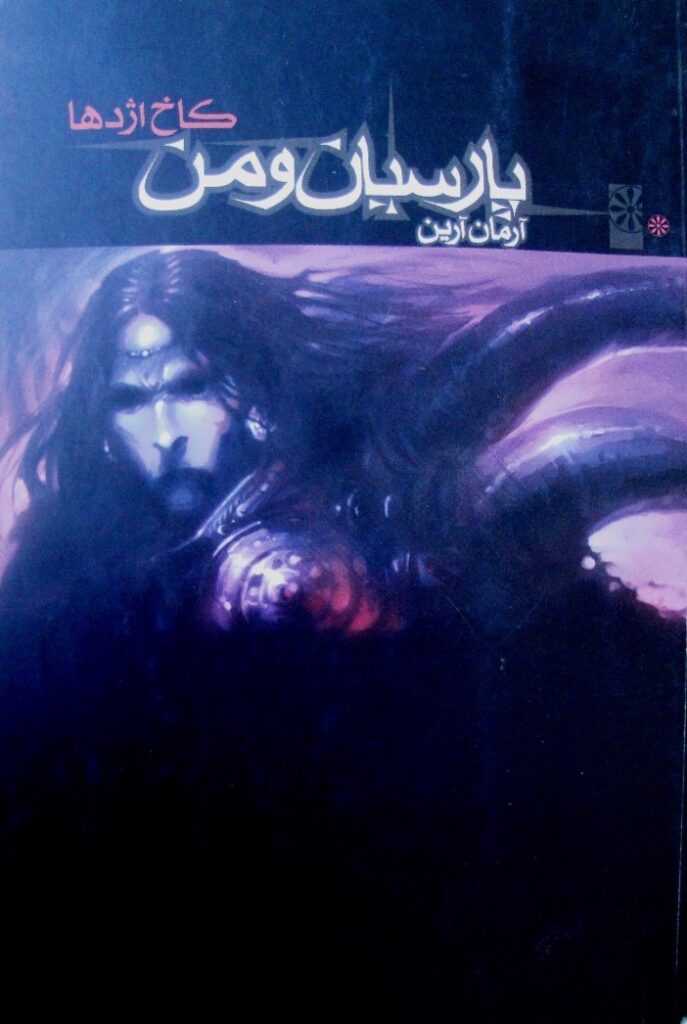
Persians & I (First Volume).
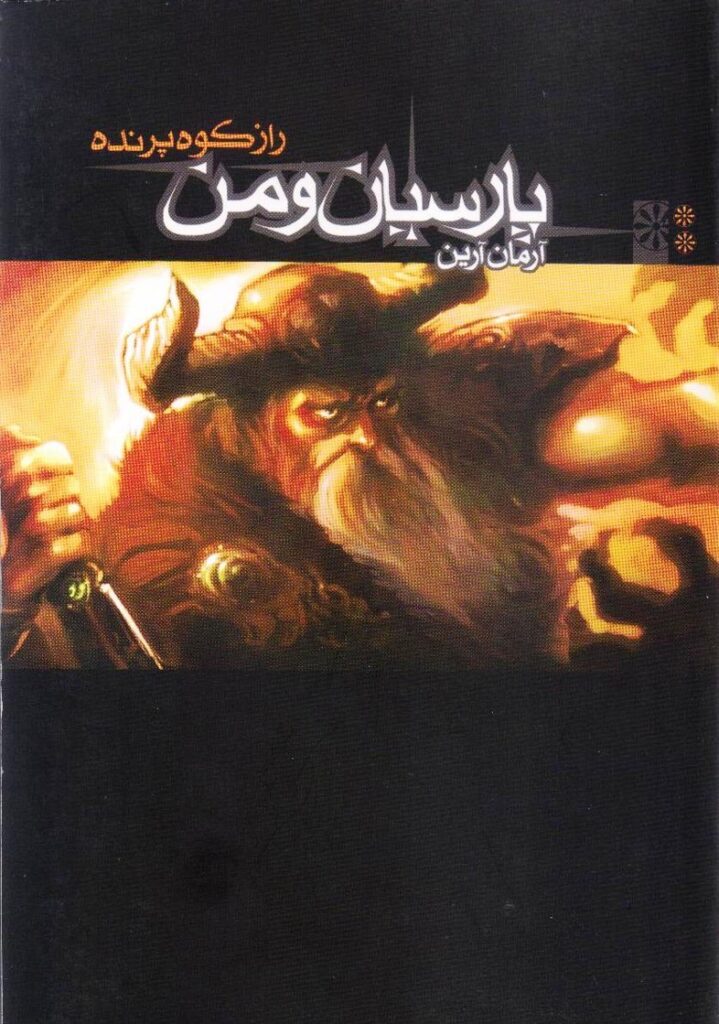
Persians & I (Second Volume).
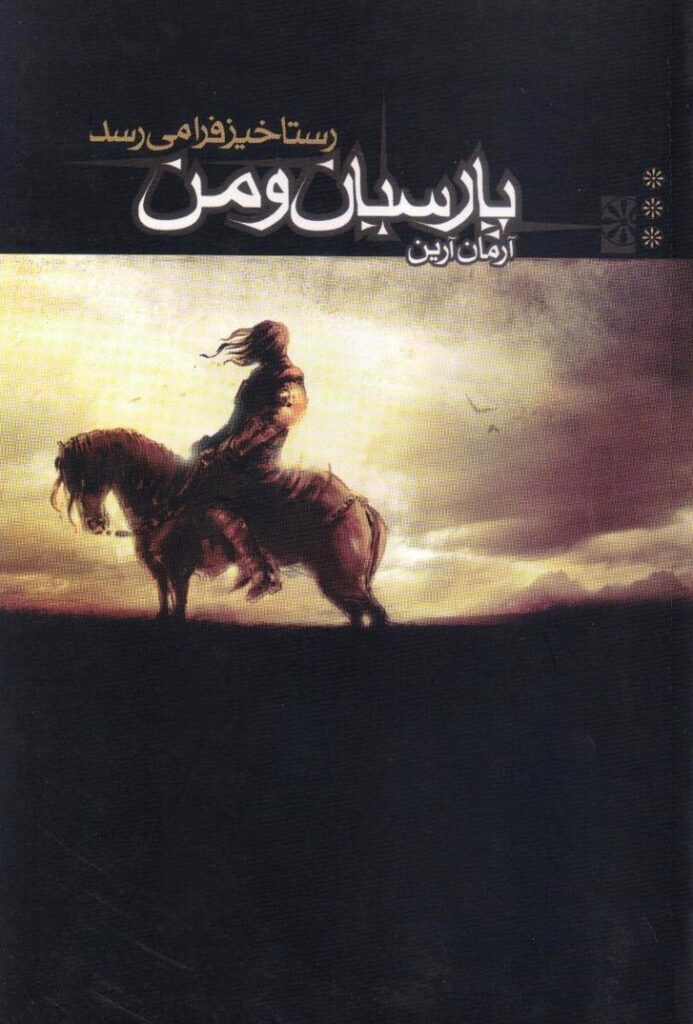
Persians & I (Third Volume).
The Persians and I – Volume I: The Palace of the Dragon
In a quiet hut nestled deep within a lush forest, a teenage boy named Ardeshir lives in seclusion with his writer parents, far removed from the distractions of the modern world. But as winter sets in, a terrifying event shatters their peaceful life—an attack that tears his world apart and hurls Ardeshir into a journey beyond time.
By a mysterious twist of fate, he is transported to the mythic age of ancient Iran—a land pulsing with legend and danger, where the lines between history and myth are still being drawn. Ardeshir awakens in the dark era of Zahhak the Serpent-Shouldered, a tyrant whose reign of terror has cast a pall across the land. In the shadows of oppression, a rebellion is stirring—led by the fearless blacksmith Kaveh and the noble Freidoun, who have vowed to overthrow the serpent king. Ardeshir, arriving on the thirteenth day of Farvardin, joins this rising tide and soon realizes that this ancient revolution may not only shape the future of the world—but also unlock the secrets of his own mysterious past.
Along the way, he forms deep bonds—most notably with young Iraj, the brave and spirited son of Freidoun. Together, they encounter warriors and spies, storytellers and rebels. Ardeshir traverses forgotten temples and hidden landscapes, confronts brutal enemies and long-buried truths. In the midst of war, he even finds brief solace in an isolated forest home, where a girl named Manena and her wise grandmother shelter him from the storm.
But peace is fleeting in an age ruled by tyranny.
As uprisings erupt and the capital city teeters on the brink of revolt, Ardeshir is drawn ever closer to a final reckoning with Zahhak himself. Through the eyes of a court sculptor, in the fire of rebellion, and through his own inner struggles, Ardeshir begins to grasp the true weight of power, sacrifice, and destiny.
What begins as a story of personal loss unfolds into a mythic odyssey—blurring the boundaries between dream and memory, myth and reality. And when Ardeshir finally returns to his own time, he carries with him the echoes of that ancient world: a hidden temple, a dagger from the past, and questions that lead not to closure, but to mysteries still waiting to be unraveled.
The Persians and I – Volume II: The Mystery of the Bird Mountain
The second volume of The Persians and I begins far from the world of myth—on a dusty roadside deep in the desert, where fourteen-year-old Siavash works as a mechanic’s apprentice, living under the cold indifference of his step-parents.
Everything changes with the arrival of Mago, a blind and enigmatic magician whose intentions remain cloaked in mystery. Claiming he needs a servant, Mago takes Siavash on a perilous journey across the desert to a towering, bird-shaped mountain—a sacred place that reveals its secret only once every twenty years. There, Siavash is entrusted with an extraordinary task: to retrieve the fabled Book of Life.
What begins as a quest for treasure soon becomes a journey through time and legend. Drawn into the epic age of ancient Iran, Siavash awakens as a royal prince and finds himself in a land on the edge of war, where kings vanish, heroes rise, and destinies are forged. At the center of it all stands Rostam—the greatest hero of Iranian epics—whose strength and sorrow shape the fate of nations.
Following Rostam through a series of legendary trials, Siavash faces enchanted beasts, illusory palaces, treacherous betrayals, and moral dilemmas whose echoes reverberate across generations. He bears witness to both splendor and tragedy—from the seven labors of Rostam to the shattering moment when father and son meet on the battlefield in one of the most heart-wrenching episodes of Persian lore.
Guided by the divine bird Seemorgh, Siavash is more than a bystander; he is a soul in the making—tempered through hardship, awakened by wonder, and shaped by the search for truth. His journey becomes a mirror, reflecting not only the mythic past but also the hidden depths of his own being.
And when the tale returns to the present—to the shadowed mouth of Bird Mountain—Siavash must choose again: to return to the ordinary world, or to trust the invisible forces that urge him onward, deeper into the mystery that binds all things together.
The Persians and I – Volume III: Resurrection Approaches
Bardia, a gifted and introspective teenager, lives in a secluded mansion in Tehran—cut off from his distant father and burdened by deep philosophical questions. Disciplined, well-read, and seemingly complete, he appears to have everything—except connection, purpose, and peace. Then, a sudden twist of fate changes everything: a plane crash over the Alborz Mountains hurls Bardia into a struggle between life and death.
At the edge of the abyss, he is rescued by a radiant, ancient being—Seemorgh, the guardian bird of Persian myth. Carried to the sacred summit of Mount Damavand, Bardia is chosen for a mission unlike any before. On Seemorgh’s wings, he is transported back through the corridors of time—into the heart of history, to the age of Cyrus the Great.
No longer a modern boy, Bardia awakens as a prince of the Achaemenid Empire. Alongside his cousin Darius, he traverses a world steeped in majesty and danger—encountering the splendor of fire temples, the storm of empires, and the secret tensions that threaten to unravel it all. From the siege of Babylon to hidden passageways beneath its towering walls, from battles with sorcerers and shadow cults to counsel with prophets and kings, Bardia is drawn into a grand vision that forces him to confront his deepest fears—and uncover the truth of who he really is.
Yet his journey is not his alone.
As the three narratives converge—Ardeshir from the age of myth, Siavash from the epic age, and Bardia from the age of kings—a final reckoning stirs. In the looming shadow of Mount Damavand, ancient powers awaken. The forces of good and evil prepare for a decisive confrontation. And in the heart of it all, a hidden prophecy begins to unfold.
A saga of memory, myth, and rebirth, Resurrection Approaches brings the The Persians and I trilogy to its powerful conclusion—where Iran’s timeless past meets a future still being written.
Professor Jalil Doostkhah, Iranologist and researcher, is the leading scholar on Shahnameh Studies, who has researched over 60 years in this area. In his article about Arian’s trilogy of Persian and I, Mr. Doostkhah categorizes Mr. Arian as a ‘young writer and researcher, who specializes in drama (a cinematic arts graduate)’ and one of the young recent additions in the literary realm as a member of “the contemporary young generation [who] wittingly, intelligently and dynamically follow in their ancestors’ footsteps who thought differently and were seeking new things. They, without copying them blindly and doing what others did, in an age when the worldwide links and the possibility of access to others’ cultural achievements have increased dramatically in comparison with the past, is treading this uneven path determinedly.”
Prof. Doostkhah highlights the originality of Mr. Arian’s works as follows,
“All in all, this long narrative [Arian’s novels], as Hafez said, is traveling in place and time, and it is a strong bridge between historical, clear and real today and all parts of the distant past beyond millennia and hidden in the mysteriousness and uncertainty of myth, legend and epic. But the brilliant and eye-catching imaginative depiction done by the writer is so strong that makes that mysteriousness come to life and graspable reality and it approaches the reader’s mind and conscience.”
In order to emphasize the originality and creativity of Arian’s adaptation, Prof. Doostkhah writes “When the writer talks about Iran’s myth and epic, he does not copy and rewrite the motifs. On the contrary, he has taken the themes and, in proportion to his own chosen structure for this narrative, he has mixed them with a different part – with necessary changes using a new structure – in his writing. The result of this skilled work is a gripping story for today’s children and young adults.”
In another literary critique published in the “Book of the Month of Children and Adolescent” about one of Mr. Arian’s books titled “Persian and I: Azhdahak Palace”, Shohre Kaedi, a distinguished translator and literary of the children and adolescent literature, praises the fantasy of the novel as follows,
“Stunning and believable fantasy of this novel easily covers the heroic honorable events of an ancient nation and attaches them to a life of a teenage character… Despite its high pace, the story memorably stays in the readers’ mind… The language style increase the feelings of fear, mystery and uncertainty…These novels which are filled by rare wisdom and rebellious emotion encompass the secret of wonders and the collapses of history. In addition, these novels are able to meet the needs of their modern era and contemporary readers…”
In yet another published article about the beneficiary’s literary work, Dr. Hasan Parsayi an acclaimed author, translator and literary critic, has praised Mr. Arian’s literary style and innovations as follows,
“The writer (Arman Arian) follows his mythical characters, walks and eats with them, fights along with them and in this way, recreates the history with them… Pure imagination of the writer provides all necessary elements for characters, events and legendary atmosphere, and situates everything on their mythical places so the reader is able to see everything as they should, feel them, speculate about them and unify with them. Therefore, in throes of events, the readers’ soul would be purified in defense of honesty, goodness and all good symbols against tyranny, darkness, betrayal and lies…The narrator’s language and selection of vocabulary
appropriately do not exceed the understanding of a smart young adult and the readers easily sympathize with the teen narrator to enter the world of the story.”
Dr. Parsayi also upholds the realistic and sensorial depiction of events and characters and writes, “All the descriptions of novel are breathtakingly real and sensorial…The special descriptions of locations and architecture indicate that the writer undoubtedly believes his fictional stories. These descriptions are visualized as if they are sculpturing the nature or even animating it… The writer’s laconic style in animating natural phenomena indicates the writer’s notable ability in prose, language, creative imagination and sensorial approach.”
Dr. Parsayi later points to Mr. Arian’s comprehensive understanding of the subject as follows, “Definitely Arman Arian has a pluralist approach which is recognizable in all the three novels. This pluralism indicates that, in regards to characters, atmosphere and the themes of the stories, he has all necessary knowledge which intensifies the realistic aspects of the novel with their visual characteristics. It means that he has already learned necessary lessons and engaged in writing process with comprehensive understanding of the subject.”
While announcing ‘the emergence of a powerful writer’, Dr. Parsayi asserts that “definitely, all three novels are among the most visual novels of recent years and suitable for film adaptation due to their lively and cinematic theme and atmosphere…The trilogy of ‘Persian and I’ is written impressively to the extent that the reader feels obliged to read the novels even if they have read Shahname many times… The narrative prose of all three novels is a sensorial and mythical prose which is appropriate and consistent with the epic theme of the novels.”
Footnotes:
1- Doostkhah, Jalil (2008). Young Generation, Culture and Ancient Literature (An Analysis of Persian and I). Book World Quarterly. Issue 1-2. P. 45-46.
2- Shohre Ka’edi (2005/08). Rare Wisdom and Rebellious Emotion. Book of the Month of Children and Adolescent. No.94, P: 66.
3- Parsayi, Hasan (2006). Revival of Myth and History. Book of the Month of Children and Adolescent. No.101,102,103. P:70-78